One dog can go through 1,000+ waste bags a year-and many “biodegradable” options still behave like regular plastic when they end up in a landfill. If you’ve tried switching to greener pet products and walked away frustrated by ripping bags, leaky seams, mysterious eco-labels, or toys that fall apart in a week, you’re not alone. The problem isn’t your commitment; it’s that the pet aisle is packed with marketing claims that don’t hold up under real-world use.
This matters for more than conscience. Waste bags that fail mid-walk create a hygiene hazard and can spread pathogens in public spaces. Low-quality “eco” toys can shed microplastics, splinter, or become choking risks-especially for power chewers. And well-intentioned purchases can backfire environmentally when products are made from blended plastics, shipped inefficiently, or designed to be replaced constantly.
The Plastic-Free Pup is a practical, step-by-step guide to transitioning without the mess, the guesswork, or the wasted money. You’ll learn how to choose compostable or truly biodegradable waste bags that perform like conventional options, how to read certifications and materials so you can spot greenwashing quickly, and how to build a toy rotation around durable, repairable, and lower-impact materials that suit your dog’s chewing style. The goal isn’t perfection-it’s a reliable system that makes every walk and play session cleaner, safer, and meaningfully lighter on the planet.
Biodegradable vs. Compostable Dog Poop Bags: Decoding Labels, Certifications, and Greenwashing Red Flags
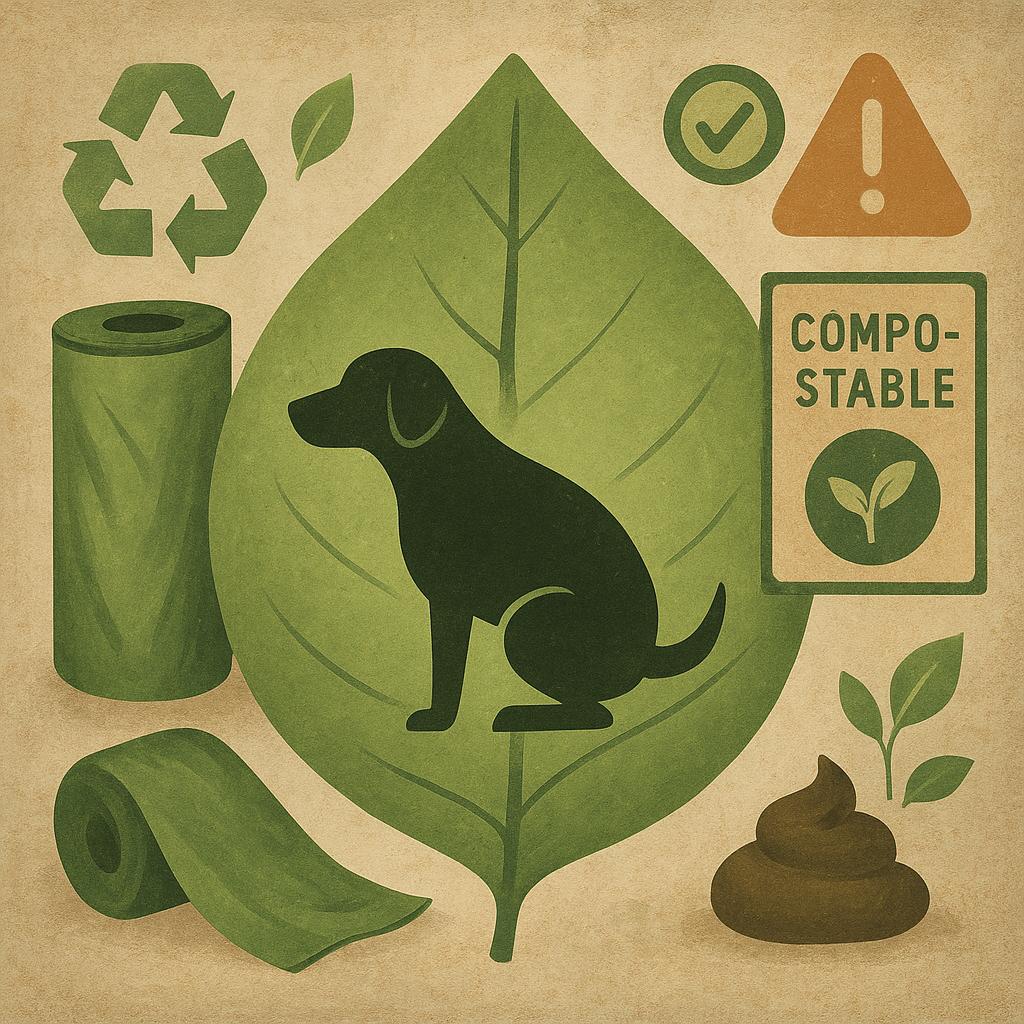
Biodegradable often means a bag can break down eventually, but with no guaranteed timeframe or conditions.
Compostable is stricter: it must disintegrate and biodegrade into non-toxic material under defined composting conditions.
Decode labels by hunting for certifications, not marketing adjectives:
- ASTM D6400: Verifies industrial compostability for plastics.
- EN 13432: Confirms compostability plus low heavy metals and eco-tox testing.
BPI Certification: Fast proof-check for verified compostable products sold in North America.
Greenwashing red flags my current QA workflows catch most often:
- Claims like “oxo-biodegradable” (often fragments into microplastics).
- No certification ID, lab name, or standard referenced.
- “Compostable” without stating industrial vs. home compost.
- “Plant-based” with no disclosure of polymer type (PLA/PBAT blends are common).
Practical takeaway: choose certified compostable bags, then confirm your local facility accepts compostable plastics-many don’t.
### Common Questions
- Can I compost dog poop bags at home? Usually not; pathogen risk is high and home piles rarely hit stable sanitizing temps.
- Do compostable bags break down in landfills? Typically no; low oxygen slows decomposition dramatically.
Disclaimer: This is general guidance; follow local waste rules and consult your municipality for disposal requirements.
Step-by-Step Switch Plan: How to Transition to Plastic-Free Waste Bags Without Leaks, Rips, or Odor Mishaps
Run a controlled two-week swap so failures happen at home, not on a walk.
Week 1 (trial mode): keep your old bags as backup and test compostable bags on easy pickups (firm stool, dry grass).
- Kitchen scale: Confirms bag thickness/consistency fast-compare 10 bags; big weight swings often mean weak spots.
- Do a 60‑second “twist + hang” test: knot, hang the loaded bag from a doorknob, and watch for stretch or seep.
Week 2 (full switch): move to compostable bags for all outings, but upgrade your handling.
- Double-bag only for watery stool or sharp gravel zones; otherwise you negate the waste reduction.
- Prevent odor by tying a tight flat knot and storing in a small sealed container until you hit a bin.
- If bags tear at the perforation, pre-separate 3-4 before leaving home.
Rule of thumb: if you had 2+ failures in 14 days, switch to a thicker compostable SKU-not back to plastic.
Choosing Truly Sustainable Dog Toys: Material Safety, Durability Testing, and Microplastic-Shedding Risks
Choose toys like you’d choose food: verify material safety, then wear behavior, then microplastic shedding risk. “Natural” doesn’t mean non-toxic, and “tough” often means high-friction plastics.
- FTIR Spectroscopy: Flags polymer types and common additives fast.
- BS EN 71-3 heavy-metal migration testing: Screens for lead/cadmium risks under mouthing conditions.
Prioritize single-material designs (easier to validate) and avoid “mystery rubber” blends. Look for maker transparency on resin source, pigments, and compliance documentation.
For durability, favor dense natural rubber or tightly woven hemp/cotton with minimal coatings. Skip foamed, chalky, or “crumbly” textures-these correlate with higher particle release in recent abrasion benchmarks.
At home, do a simple wet-wipe rub test: wipe the toy firmly; visible residue signals shedding. Replace toys when surface crazing or bite marks deepen beyond 1-2 mm.
Plastic-Free Pup Toolkit: Best Composting and Disposal Practices for Dog Waste (What Actually Works)
Dog waste isn’t compostable in your veggie pile; treat it as a pathogen-managed stream. This quarter’s municipal audits still show most “biodegradable” bags end up in landfill, so disposal method matters more than marketing.
- Green Cone Solar Digester: Handles pet waste on-site with heat-assisted breakdown, keeping it out of bins and waterways.
- Bokashi Fermentation: Stabilizes waste fast in a sealed bucket, cutting odors before final disposal in a dedicated non-food soil trench.
What actually works in homes:
- Use certified compostable bags only if your facility accepts them; otherwise choose paper wrap or no bag into a dedicated lidded container.
- Keep a separate “pet waste only” system; never mix with kitchen compost or worm bins.
- For apartments, double-seal in a small container, then place in trash; do not flush.
Common Questions
- Can I compost dog poop for my garden? Only in a dedicated, pet-waste system; never on edible beds.
- Do compostable bags break down in landfills? Rarely; low oxygen and low heat slow degradation drastically.
Disclaimer: Follow local sanitation rules and manufacturer guidance; hygiene practices reduce zoonotic risk.
Q&A
1) Are “biodegradable” poop bags actually better-and how do I avoid greenwashing?
Look for bags certified to a recognized standard (e.g., ASTM D6400 or EN 13432) and clearly labeled as compostable rather than vaguely “eco” or “degradable.”
Most “oxo-degradable” plastics just fragment into microplastics, so skip those.
Also note: compostable bags don’t magically disappear in landfills; they’re still a better material choice, but the biggest environmental win is pairing them with proper disposal where available.
2) Will compostable poop bags leak, tear, or stink more than plastic?
High-quality compostable bags perform well, but thickness and storage matter.
Choose bags labeled “extra-thick” (often 18-25 microns) with a strong bottom seal, and consider a double-knot for messy pickups.
Store rolls cool and dry; heat and sunlight can weaken plant-based films over time.
For odor control, use a dispenser with a tight lid or a small washable “walk pouch,” and empty it after each outing.
3) What’s the safest way to switch to sustainable toys without sacrificing durability-or my dog’s teeth?
Match toy material to chewing style: for light chewers, try natural rubber or tightly woven organic cotton; for power chewers, look for dense natural rubber and replace at the first sign of chunks coming off.
Avoid “mystery blends” with heavy fragrance, glitter, or unknown fillers; prioritize brands that disclose materials and dyes.
The gold rule: if you can indent it easily with a fingernail, it may be too soft for aggressive chewers-durable doesn’t mean rock-hard, but it should resist shredding and splintering.
Wrapping Up: The Plastic-Free Pup: How to transition to biodegradable waste bags and sustainable toys. Insights
Going plastic-free with your pup is less about perfection and more about building a reliable system-one that keeps you stocked, consistent, and confident on every walk and play session. Biodegradable waste bags and thoughtfully chosen toys don’t just reduce trash; they also shape healthier routines at home, in your neighborhood, and in the places your dog loves most.
Keep your momentum by treating sustainable swaps like any other training plan: introduce changes gradually, reinforce what works, and adjust based on real-life use. If a compostable bag tears in wet grass, try a thicker plant-based blend. If a “natural” toy falls apart in minutes, upgrade to durable rubber, hemp, or tightly woven fabric designed for your dog’s chew style. Sustainability should feel sturdy, not fragile.
Expert tip: Create a “zero-excuses kit” and you’ll make sustainability automatic. Keep a compact pouch clipped to every leash with:
- a small roll of certified compostable bags,
- a backup roll stored in your car or entryway,
- and one long-lasting, repairable toy (e.g., a natural rubber treat-dispensing toy) that replaces impulse plastic purchases.
Then add a simple monthly checkpoint: replace only what you actually used and loved, and retire what didn’t perform. Over time, your dog’s gear becomes a curated set of dependable, low-waste essentials-proof that the most sustainable choice is the one you’ll stick with on your busiest, messiest day.

Sarah Jenkins is a lifelong animal advocate and pet wellness expert with over a decade of hands-on experience working alongside animal rescues. Passionate about nutrition, behavior, and daily care, she founded The Fletics Pet to translate complex pet health topics into actionable, easy-to-understand advice for everyday pet parents. When she isn’t researching the latest in pet care, you can find Sarah exploring hiking trails with her Golden Retriever, Max, or relaxing at home with her rescue cat, Luna.