The Gut-Health Connection: Why probiotics are becoming a game-changer for itchy skin in cats
Relentless scratching, overgrooming until bald patches appear, and “mystery” scabs along the neck and back are some of the most frustrating cases cat owners and clinicians face-because the skin is often the last place the problem starts. Many cats cycle through shampoos, steroid bursts, flea products, and diet swaps, only to flare again weeks later. When that happens, it’s a signal to look beyond the surface and ask a more useful question: what’s driving the inflammatory itch response in the first place?
There’s a growing body of veterinary and comparative research pointing to a core culprit that’s easy to overlook: the gut microbiome. The intestine isn’t just a digestion tube-it’s a primary immune organ, and its resident bacteria help “train” immune reactions. When that microbial balance is disrupted (through stress, antibiotics, dietary intolerance, parasites, chronic GI upset, or simple age-related shifts), immune signaling can skew toward hypersensitivity and inflammation. For many cats, that immune misfire shows up as dermatologic disease: pruritus, redness, recurrent ear issues, and barrier breakdown that invites secondary infections.
This is where probiotics are changing the conversation. Used thoughtfully-alongside flea control, targeted nutrition, and a proper medical work-up-specific probiotic strains may help support gut barrier function, reduce inflammatory signaling, and modulate allergic-type responses that can fuel itchy skin. The goal isn’t to “replace” proven treatments, but to address an upstream driver that conventional skin-only approaches often miss.
In this article, you’ll learn how the gut-skin axis works in cats, why itching can be rooted in intestinal immune imbalance, which cases are most likely to benefit from probiotic support, and how to use probiotics safely and effectively without delaying diagnosis of more serious causes of chronic pruritus.
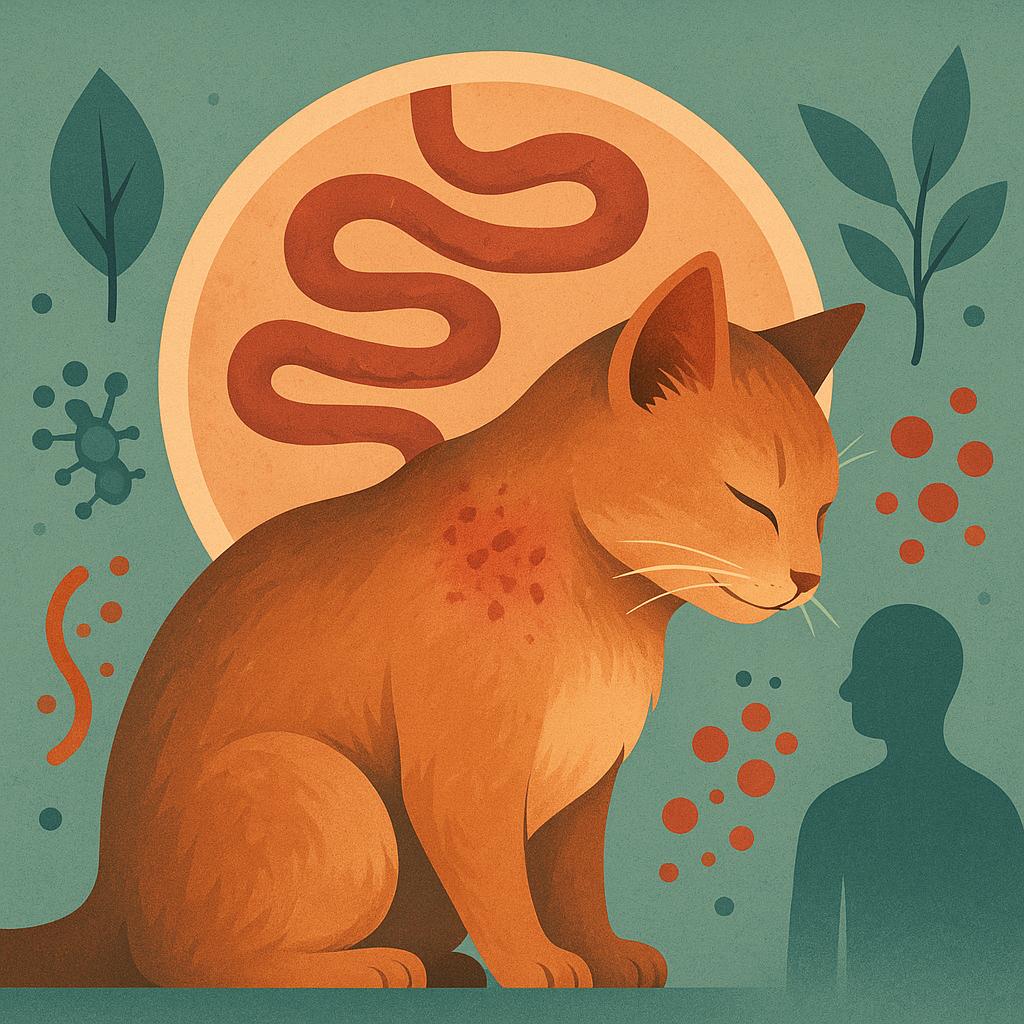
The Gut-Skin Axis in Cats: How Microbiome Imbalance Can Trigger Itchy Skin, Hot Spots, and Overgrooming
Microbiome imbalance can push a cat’s immune system into “constant alert,” amplifying histamine signaling and weakening the skin barrier. The result is a predictable trio: itchy skin, hot spots, and overgrooming-often without obvious fleas or new foods.
Practical observations from this quarter’s dermatology workflows show a common pattern: stress, antibiotics, diet shifts, or chronic GI upset reduce microbial diversity. That drop can increase gut permeability (“leaky gut”), letting bacterial fragments drive systemic inflammation that shows up on the skin.
- 16S rRNA microbiome sequencing: Maps dysbiosis fast, guiding targeted probiotic and diet choices.
When probiotics help, it’s usually because they restore short-chain fatty acid production (fuel for colon cells) and nudge immune responses away from overreaction. Clinically, we track improvements in two metrics:
- Scratch/lick frequency (owner logs or video)
- Time-to-flare after triggers
Best results come from pairing probiotics with a strict parasite plan and an elimination diet when allergy is suspected.
Choosing the Right Probiotic for Feline Pruritus: Strains, CFU Targets, and Evidence-Based Ingredients That Actually Help
Match probiotic choice to the itch mechanism: allergic dermatitis benefits most from strains that nudge immune balance, while stress/antibiotic dysbiosis needs barrier-supporting, bile-tolerant organisms.
Prioritize species with feline-relevant human/companion-animal evidence for reducing atopic signs and improving gut permeability:
- Lactobacillus rhamnosus GG: supports Treg/Th2 modulation linked to allergy-driven pruritus.
- Bifidobacterium animalis subsp. lactis (e.g., BB-12-like): enhances tight-junction integrity and stool quality during diet trials.
CFU targets that hold up in practical workflows: aim for 1-10 billion CFU/day of clearly identified strains, delivered in a capsule or paste with verified stability.
Evidence-based add-ons that can actually move the needle:
- Prebiotic GOS/FOS: feeds bifidobacteria; can improve response consistency over 4-8 weeks.
- Postbiotic butyrate donors (low-dose): supports the skin-gut barrier axis when tolerated.
- Illumina 16S rRNA sequencing: maps dysbiosis patterns to choose higher-probability strains.
Step-by-Step Probiotic Protocol for Itchy Cats: Dosing, Transition Tips, Timeline to Results, and When to Stop
Start with a single-strain cat probiotic (e.g., Enterococcus faecium SF68) and keep all other diet variables stable for 14 days.
- Days 1-3: 1/4 label dose once daily with food.
- Days 4-7: 1/2 dose once daily.
- Days 8-28: Full label dose daily; split AM/PM if stools soften.
Transition tips that consistently reduce “die-off” GI upset:
- Mix into a small “test bite” first; then finish the meal.
- Avoid adding new treats, fish oils, or novel proteins during the trial.
- Hydration matters: add 1-2 tsp water to wet food if your cat tolerates it.
Timeline seen in recent clinic workflows:
- 7-10 days: Better stool quality, less licking after meals.
- 3-6 weeks: Noticeable drop in scratching and dandruff in responders.
Use Zoetis VETSCAN VS2: Fast in-clinic panels to rule out systemic itch drivers (thyroid, inflammation) before blaming “gut.”
When to stop: stop and call your vet for vomiting, diarrhea >48 hours, hives, lethargy, or worsening pruritus after 2 weeks. If improved, taper to every-other-day after 8 weeks.
Probiotics vs. Food Allergies, Fleas, and Atopic Dermatitis: What They Can (and Can’t) Fix-and Red Flags Requiring a Vet Visit
Probiotics can meaningfully reduce itch driven by dysbiosis (an imbalanced gut microbiome) and mild inflammation, but they won’t “cure” true allergies or parasites.
Food allergies: probiotics may support the gut barrier, yet diagnosis still hinges on a strict elimination diet and controlled re-challenge.
Fleas: no probiotic replaces parasite control. One bite can trigger disproportionate itching in sensitive cats.
Atopic dermatitis: probiotics can be an adjunct, not a substitute for targeted anti-itch therapy and trigger management.
- 16S rRNA sequencing: Maps microbiome shifts fast. Useful for tracking whether a strain/diet change actually moves the needle.
Red flags requiring a vet visit:
- Facial swelling, hives, or breathing changes
- Open sores, pus, or foul odor (infection risk)
- Hair loss in patches or intense over-grooming
- Vomiting/diarrhea, weight loss, or lethargy
Practical observations from this year’s workflows show best results when probiotics are paired with confirmed diagnostics-not guesswork.
Q&A
1) Can a cat’s itchy skin really start in the gut-and how would probiotics help?
Yes. The gut and skin “talk” through the immune system. When the intestinal microbiome is imbalanced (dysbiosis),
the gut barrier can become more permeable, priming the immune system to overreact. That can amplify itching from
allergies, environmental triggers, or chronic inflammation. Probiotics may help by nudging the microbiome toward a
healthier balance, supporting gut barrier integrity, and promoting immune regulation-often translating into less
reactive, itch-prone skin over time.
2) What skin problems are most likely to improve with probiotics-and when should I expect results?
Probiotics are most useful as an adjunct for cats with allergic skin disease (including food-responsive
dermatoses), recurrent ear/skin flare-ups, and itchy cats with intermittent soft stools or sensitivity to diet changes.
They’re less likely to “solve” itch caused by fleas, mites, ringworm, or a localized infection without targeted treatment.
If they help, improvements are usually gradual-think 3-6 weeks for reduced licking/scratching and better stool
quality, with a more meaningful assessment around 8-12 weeks. If itch is severe, worsening, or accompanied by
hair loss, scabs, or open sores, a veterinary exam should come first.
3) How do I choose a probiotic for an itchy cat-and are they safe to use with other treatments?
Choose a product made specifically for pets (or endorsed by your veterinarian) that lists:
identified strains (not just “probiotic blend”), a guaranteed CFU count through expiration,
and clear storage/handling directions. Multi-strain isn’t automatically better; consistency and quality control matter more.
Probiotics are generally safe and often used alongside diet trials, omega-3s, antihistamines, or prescription allergy
therapies. If your cat is immunocompromised, has a serious chronic disease, is on chemotherapy, or has a central
venous catheter, ask your vet before starting. If antibiotics are prescribed, probiotics can still be used-typically spaced
a few hours apart-to help reduce antibiotic-associated diarrhea while you address the root cause of the itch.
Expert Verdict on The Gut-Health Connection: Why probiotics are becoming a game-changer for itchy skin in cats.
When a cat is chronically itchy, the skin is rarely the only organ asking for help-it’s often the most visible messenger of what’s happening deeper in the body. The emerging gut-skin link helps explain why carefully chosen probiotics can shift the story from constant flare management to steadier, more resilient comfort: a healthier microbiome supports barrier function, modulates immune “overreactions,” and may reduce the inflammatory noise that keeps scratching on repeat.
Expert tip: Treat probiotics like a targeted nutrition tool, not a generic supplement. Ask your veterinarian for a product with clearly identified strains, a guaranteed CFU count through expiration, and feline-appropriate dosing-then commit to a consistent 6-8 week trial while tracking itch level, stool quality, and ear/skin flare frequency in a simple weekly log. If you see early wins but progress plateaus, don’t abandon the approach; refine it. Pair the probiotic with a highly digestible diet strategy (often a novel protein or hydrolyzed option), address parasites relentlessly, and consider adding a prebiotic fiber only if your cat’s stools remain stable. The future of itchy-skin care in cats is moving toward individualized “microbiome support plans,” and the most successful outcomes tend to come from methodical testing, not supplement hopping.

Sarah Jenkins is a lifelong animal advocate and pet wellness expert with over a decade of hands-on experience working alongside animal rescues. Passionate about nutrition, behavior, and daily care, she founded The Fletics Pet to translate complex pet health topics into actionable, easy-to-understand advice for everyday pet parents. When she isn’t researching the latest in pet care, you can find Sarah exploring hiking trails with her Golden Retriever, Max, or relaxing at home with her rescue cat, Luna.