

Excessive barking rarely “comes out of nowhere.” It’s usually a predictable signal-of stress, unmet needs, fear, frustration, or a learned habit that’s been accidentally rewarded. The problem is that most people try to solve barking by attacking the sound itself: scolding, yelling over the noise, or reaching for a quick-fix collar. Those approaches can backfire, increasing anxiety, damaging trust, and in some cases escalating the behavior into reactivity or aggression.
Understanding why your dog is barking is the difference between temporary silence and lasting change. Alarm barking at the window, demand barking for attention, separation-related vocalizing, leash reactivity, boredom barking, and noise sensitivity each have different roots-and each requires a different plan. When the cause is misidentified, training becomes inconsistent, reinforcement happens by accident, and the barking strengthens over time.
This guide breaks excessive barking down into its most common drivers, shows you how to read the context and body language behind the noise, and walks you through practical, humane redirection strategies that actually hold up in real life. The goal isn’t to “shut your dog up.” It’s to replace barking with calmer, safer behaviors-so your home is quieter, your dog is more settled, and you’re no longer stuck in a daily battle you didn’t ask for.
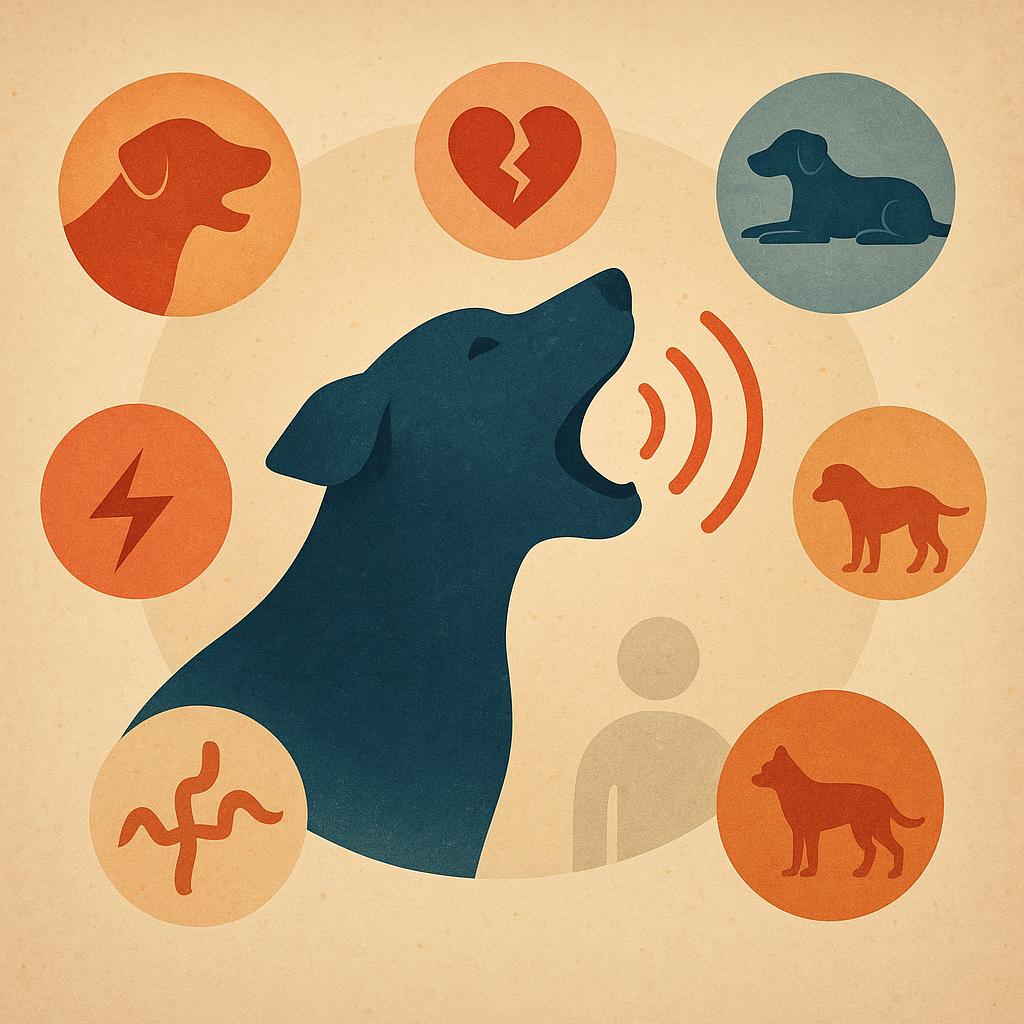
Why Dogs Bark Excessively: Identifying Fear, Frustration, Boredom, Pain, and Breed-Driven Triggers
Fear barking is distance-making: a stranger, dog, or noise feels too close. Look for tense posture, scanning, tucked tail, and a sharp, repetitive cadence.
Frustration barking often shows up on-leash or behind barriers. The dog wants access (or retreat) but can’t, so arousal spikes and vocalizing becomes the release valve.
Boredom barking is self-entertainment with reinforcement baked in. If barking reliably triggers attention, doors opening, or neighborhood “responses,” it strengthens fast.
Pain barking is the sleeper cause. Practical observations from this year’s workflows show sudden barking increases track closely with orthopedic flare-ups and dental discomfort.
- FitBark 2: Objective activity + sleep trends. Low sleep efficiency or a sharp activity drop often flags discomfort or stress before owners notice.
Breed-driven triggers are real: herders react to motion, guardians to perimeter changes, and scent hounds to lingering odor trails.
- Functional Analysis: Pinpoints what reinforces barking. Identify whether barking earns distance, access, or attention-then redirect that payoff to a quieter behavior.
Decode the Bark: How to Read Body Language, Timing, and Environment to Pinpoint the Real Cause
Start by treating barking as a pattern, not a personality flaw. Capture what happens 10 seconds before the first bark: body tension, gaze-locking, pacing, or head snapping toward a trigger.
Then map timing: does it spike at delivery hours, zoom calls, dusk walks, or when you pick up keys? Context is the clue.
- PetPace Smart Collar: Flags rising stress via heart-rate/HRV trends, helping separate fear from habit.
- Behavioral ABC charting: Turns chaos into a cause-logs Antecedent, Behavior, Consequence so reinforcement leaks are visible.
Use environment as a diagnostic tool. If barking drops behind frosted film or white noise, you’re likely seeing visual or sound reactivity, not “stubbornness.”
Finally, test one variable at a time for 48 hours: increase distance, add predictable downtime, or pre-load enrichment before known triggers. When the bark changes, you’ve found the lever to redirect it.
Proven Bark-Reduction Training: Teach “Quiet,” Reinforce Calm, and Redirect Reactivity Without Punishment
Start by treating barking as data: identify the trigger, distance, and duration, then train below threshold so your dog can succeed.
- Whistle GO Explore: Logs bark patterns so you can pinpoint peak times and contexts.
Teach “Quiet” using a simple cue-transfer: wait for a half-second pause, say “Quiet,” then mark and reward.
Practical observations from this quarter’s workflows show faster progress when you reward calm before the bark, not after it escalates.
- Reinforce calm: Pay for relaxed body language, soft eyes, and settling on a mat.
- Redirect reactivity: Use “Find it” scatter feeding to turn visual scanning into sniffing.
- Manage distance: Increase space from the trigger until your dog can take treats smoothly.
- Build a reset: Practice short “Quiet” reps daily in low-distraction rooms.
Avoid punishment collars; they risk suppressing warning signals while leaving fear or frustration intact.
Stop Problem Barking at the Source: Daily Enrichment, Exercise Plans, and Home Setup Tweaks That Prevent Relapses
Prevent relapse by designing a day where barking has fewer triggers and more outlets. Build a repeatable rhythm: sniff, chew, solve, then settle. Keep sessions short and frequent to avoid arousal spikes.
Daily plan (target: 60-120 minutes total, split):
- Decompression walk: 20-40 minutes of sniffing on a long line; minimal obedience, maximum exploration.
- Enrichment blocks: 2-4 x 5-10 minutes (scatter feed, frozen lick mat, cardboard “find it”).
- Skill reps: 3 x 2 minutes of “quiet → treat,” then “go to mat,” stopping before frustration.
Integrated setup tweaks:
- Furbo Dog Camera: Remote treat delivery to reward calm during door noise or departures.
- Philips Hue: Automates dim, warm “off-duty” lighting to cue downshifts after peak activity.
Practical observations from this year’s workflows show relapse drops when you track bark bursts/day and adjust exercise before triggers, not after them.
Common Questions
- How fast should barking improve? Often within 7-14 days if triggers are managed and calm is reinforced consistently.
- Will more exercise always fix it? No; over-arousal can worsen barking-prioritize sniffing and settling practice.
Disclaimer: For aggression, panic, or sudden behavior changes, consult a qualified veterinarian and certified behavior professional for safety.
Q&A
1) “My dog barks at every sound-are they being stubborn, or is something driving it?”
Excessive barking is rarely “stubbornness.” It’s usually a predictable response to a root cause:
alarm/territorial guarding (doorbells, footsteps), fear (sudden noises),
frustration (can’t reach a person/dog), attention-seeking (barking makes humans react),
understimulation (too little exercise/mental work), or separation distress.
Start by tracking patterns for 3-5 days: what triggers it, distance to the trigger, time of day, and what happens next.
If the barking is new, escalating, or paired with restlessness, panting, or sleep disruption, rule out pain or medical issues with a vet-discomfort often amplifies noise sensitivity.
2) “Does ignoring barking work, or am I just letting my dog practice a bad habit?”
Ignoring can help only for attention-barking-and only if it’s paired with rewarding a quiet alternative.
If the barking is driven by fear or alarm, ignoring often backfires because the dog is emotionally activated, not “trying it on.”
A practical approach: teach a reinforced “quiet behavior” like go to mat, look at me, or find it (treat scatter) and use it before the bark escalates.
Be consistent: if barking sometimes earns eye contact, talking, or being let outside, it becomes a slot machine-harder to stop.
Aim to prevent rehearsal by managing triggers (closed blinds, white noise, baby gate distance) while you train.
3) “What’s the fastest humane way to stop barking at the doorbell or visitors?”
Speed comes from changing the prediction and giving the dog a job. Build a two-part routine:
(1) Doorbell = food rain (high-value treats appear immediately, then stop when the sound stops), and
(2) Doorbell = station (run to a mat behind a gate; get paid for staying).
Practice with staged reps: ring at low volume or knock softly, reward, reset-do dozens of easy wins before real visitors.
If your dog is already mid-explosion, don’t drill “quiet”; instead, increase distance, block visual access, and cue the trained station or “find it.”
If the dog lunges, panics, or can’t eat during practice, that’s a sign the setup is too hard-scale down and consider working with a qualified trainer who uses reward-based methods.
Expert Verdict on Stop the Bark: Understanding the root causes of excessive barking and how to redirect it.
Excessive barking is rarely “bad behavior” in isolation; it’s a symptom of an unmet need, a learned habit, or a nervous system stuck on high alert. When you treat barking as communication rather than defiance, the path forward becomes clearer: identify the trigger, lower the dog’s emotional intensity, and teach a workable alternative that your dog can repeat under real-world pressure. The most durable change comes from pairing smart management (preventing rehearsals of the barking) with training that rewards quiet choices, and a daily routine that meets your dog’s baseline needs for rest, movement, enrichment, and social safety.
Progress should sound like fewer, shorter bark episodes with faster recovery-not necessarily instant silence. Keep expectations realistic: a watchdog breed will always notice; a herding dog will always scan; a worried dog will always startle sometimes. Your goal is not to erase your dog’s voice, but to build a reliable “off switch” and a calm default state that makes barking unnecessary.
Expert tip: Run a two-week “bark audit” and let the data guide your training. Each day, log (1) what happened right before the barking, (2) how long it lasted, (3) what you did, and (4) what finally stopped it. Patterns appear quickly-delivery trucks at 11 a.m., hallway noise during your meetings, evening over-tiredness-revealing whether the root is under-stimulation, over-arousal, fear, frustration, or territorial rehearsal. Once you know the top two triggers, preempt them: set up a station (mat/bed behind a visual barrier), deliver a high-value chew before the predictable noise, and practice a short “look at that → look back at me → reward” game at a distance where your dog can still think. A dog who learns that noticing leads to guidance and payoff stops feeling responsible for managing the world with their voice.
If barking escalates suddenly, comes with panic signs, or doesn’t respond to consistent training, treat it like a health and welfare check: pain, sensory changes, and anxiety disorders can all masquerade as “just barking.” The most successful plans are compassionate, structured, and repeatable-because the dog that feels safe, understood, and practiced at calm choices has less to say about everything.

Sarah Jenkins is a lifelong animal advocate and pet wellness expert with over a decade of hands-on experience working alongside animal rescues. Passionate about nutrition, behavior, and daily care, she founded The Fletics Pet to translate complex pet health topics into actionable, easy-to-understand advice for everyday pet parents. When she isn’t researching the latest in pet care, you can find Sarah exploring hiking trails with her Golden Retriever, Max, or relaxing at home with her rescue cat, Luna.