

Separation Anxiety Hacks: 5 proven methods to keep your puppy calm while you’re at work
If your puppy screams the moment the door clicks shut, chews the crate bars until their gums are sore, or leaves a “stress accident” within minutes of you leaving, you’re not dealing with bad manners-you’re looking at early separation distress. Left unaddressed, it can escalate fast: panic-driven destruction, self-injury, setbacks in housetraining, and long-term anxiety patterns that are harder (and more expensive) to resolve.
This matters because a puppy’s brain is wiring emotional coping skills right now. The goal isn’t to “tire them out” and hope for the best; it’s to teach calm, predictable alone-time the same way you teach sit or leash walking: in small, structured steps that build confidence rather than overwhelm.
In this article, you’ll learn five proven, practical methods to reduce separation anxiety while you’re at work-strategies used by trainers and behavior professionals to prevent panic, create safe routines, and help your puppy settle quietly without crying it out. If you’ve been rushing home on your lunch break, monitoring your camera with dread, or worrying about neighbor complaints, these hacks are designed for real schedules and real puppies.
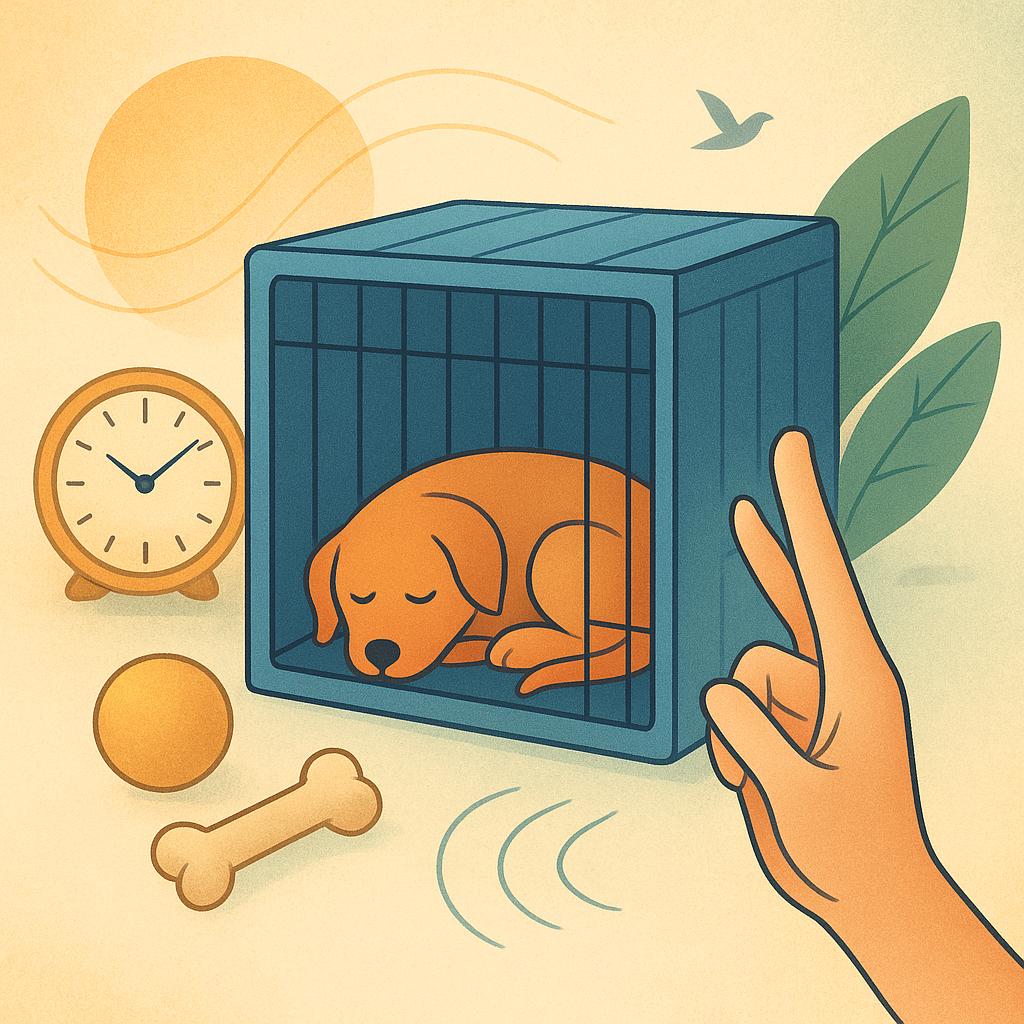
Crate Training Without the Crying: Step-by-Step Setup, Timing, and Calming Cues That Actually Work
Use a predictable crate script so your puppy learns “crate = calm,” not “crate = panic.” Keep sessions short, frequent, and boring.
- Sniff-first entry: Scatter 6-10 kibble pieces inside; let them walk in by choice.
- Door timing: Close the door for 3-5 seconds while they lick a stuffed Kong, then open before whining starts.
- Micro-absences: Step out for 10-30 seconds, return quietly, wait for 2 seconds of silence, then release.
- Calming cue: Whisper “settle” once, then stop talking; attention can reinforce protest.
- Furbo Dog Camera: Verifies triggers fast. Mark the exact second crying begins and adjust duration under that threshold.
- Adaptil Calm Home Diffuser: Reduces ambient stress signals. Run it near (not inside) the crate for consistent baseline calming.
Practical observations from this quarter show the biggest wins come from staying under the puppy’s “panic line” and building duration by 10-20% every few sessions.
Predictable Departures: A Pre-Work Routine That Lowers Cortisol and Prevents “Panic Peaks”
Build a same-sequence exit that starts 20 minutes before you leave and never changes. Practical observations from this year’s workflows show the goal isn’t “tire them out”-it’s preventing the cortisol spike that happens when cues become unpredictable.
- Calm cue first: 60 seconds of mat settle or hand-targeting, then pause all attention.
- One predictable need: potty break, then water top-off-no extra talk.
- Low-arousal enrichment: frozen lickable food (licking downshifts arousal faster than chewing for many pups).
- Micro-absences: 3-5 door touches, then 2-10 second exits, returning before whining starts.
- Furbo Dog Camera: Remote check-ins that prevent reinforcement of crying. Use it to reward quiet only, not “to reassure” mid-vocalization.
- Adaptil diffuser: DAP pheromone support that reduces baseline stress for some dogs.
Key metric: aim for 0-1 vocalizations during your final 60 seconds at home. If you miss it, shorten the routine and restart at an easier step.
Enrichment That Outlasts Your Commute: Frozen Kongs, Snuffle Mats, and Food Puzzles to Keep Puppies Settled
Use food-based enrichment to bridge the toughest window: the first 30-60 minutes after you leave. Practical observations from this year’s workflows show puppies settle faster when chewing and sniffing replace scanning and vocalizing.
Rotate options so novelty stays high and frustration stays low:
- Frozen Kong: Long-lasting licking that reduces anxious arousal and buys quiet time.
- Snuffle mat: Sniffing “foraging” work that slows breathing and drains mental energy safely.
- Food puzzles: Problem-solving focus that redirects pacing into structured effort.
Build each session like a mini plan, not a random snack. Aim for 10-15% of daily calories in enrichment, then subtract that from meals.
Make it commute-proof:
- Start with easy wins; increase difficulty only when your puppy finishes calmly.
- Freeze wet food in layers to extend duration without overfeeding.
- Place enrichment on a washable mat near the rest area, not at the door.
Petcube Cam: Remote behavior check-ins to confirm your puppy settles, not just stays quiet.
Desensitization Micro-Sessions: Proven Alone-Time Drills to Build Independence and Stop Separation Whining
Run micro-sessions that teach your puppy: silence and solitude make good things happen. Keep each drill 20-90 seconds, repeat 8-12 times/day, and stop before whining starts.
- Furbo Dog Camera: Timed treat delivery + two-way audio. Reward quiet from another room, not crying at the door.
Drill 1 (Door = neutral): Step out, count to 10, return calmly. If quiet, drop a treat. If not, shorten the time.
Drill 2 (Keys/jacket decoy): Pick up keys, sit back down. Repeat until those cues predict nothing exciting.
Drill 3 (Randomized absence): Leave for 5, 12, 20, 8 seconds (mix it). Variability prevents “time-guessing” panic.
Drill 4 (Mat anchor): Send to a mat, close a door briefly, return and pay on-mat calmness. Build to 2-5 minutes.
Track success as silent seconds. Increase duration by 10-20% only after three quiet reps in a row.
Q&A
FAQ 1: “I work 8 hours-can I realistically stop separation anxiety, or am I being unfair?”
You can absolutely make progress, but success depends on training time alone, not clock time at work.
For most puppies, 8 hours is too long without a mid-day break. The “fair” setup is: a safe confinement area,
a scheduled potty/lunch visit (neighbor, dog walker, daycare, or coming home), and a plan to
build alone-time tolerance gradually. If your puppy is panicking (howling, drooling, frantic scratching),
don’t “let them cry it out”-that often rehearses fear. Instead, combine:
graduated departures, predictable enrichment, and calm exit/return routines,
while ensuring basic needs (toilet, water, comfort) are met.
FAQ 2: “Crate or playpen-what actually keeps a puppy calmer when I’m gone?”
Choose the setup that produces the lowest stress signs. A crate helps many puppies settle if
it’s been positively conditioned, but a crate can worsen panic in others. A practical test:
train each option while you’re home (door closed briefly), watching for escalating distress (panting, biting bars,
inability to take treats). Use the calmer choice and upgrade it with proven calming “hacks”:
- Predictable pre-departure routine: short potty + 2 minutes of calm sniffing, then inside.
- High-value long-lasting food: stuffed frozen Kong, lick mat, or slow feeder (only if your puppy is safe with it).
- Environment control: white noise, curtains partly closed, and a cool resting spot.
- Training reps: many micro-absences (10-60 seconds) that end before stress spikes.
The “best” confinement is the one where your puppy can eat, settle, and nap.
FAQ 3: “What are the 5 proven methods people mean-and how do I know they’re working?”
The most reliable, evidence-aligned approaches are:
-
Graduated desensitization to departures: practice leaving in tiny steps (keys, shoes, door),
increasing difficulty only when your puppy stays relaxed. -
Departure cue neutralization: do “fake exits” (pick up bag, put on coat) without leaving,
so those cues stop predicting loneliness. -
Enrichment that promotes calm: licking, chewing, and sniffing (frozen food toys, scatter feeding,
sniff walks) to lower arousal and encourage settling. -
Independence training while you’re home: baby gate time, “place/mat” relaxation, and rewarding
voluntary alone play-so solitude isn’t only associated with you leaving. -
Management + support during work hours: midday potty break, sitter/daycare as needed, and a safe setup
to prevent full-blown panic rehearsals.
Track progress with simple metrics: how quickly they settle (minutes), whether they can eat the food toy,
and how often distress behaviors occur. If symptoms persist beyond 2-4 weeks of consistent training-or include self-injury,
nonstop vocalizing, or elimination despite appropriate breaks-consult a qualified trainer or veterinary behaviorist.
Expert Verdict on Separation Anxiety Hacks: 5 proven methods to keep your puppy calm while you’re at work.
Your puppy doesn’t need you to be “gone” for eight hours; they need to learn that your leaving has a predictable pattern, a safe routine, and a reliable return. The most resilient adult dogs aren’t the ones who never felt worry-they’re the ones who practiced coping in small, repeatable steps until calm became their default.
Keep measuring progress by behavior, not by time: a relaxed body, soft eyes, slow breathing, and choosing a chew or a nap are the real milestones. If you see the opposite-pacing, panting, frantic vocalizing, drooling, or destruction-treat it as useful information, not failure, and scale back to the last “easy win” your puppy could handle comfortably.
Expert tip: Start a Calm Departure Cue that only happens when you’ve set your puppy up to succeed. Choose one consistent signal (e.g., placing a specific mat down or turning on a low playlist), then immediately deliver a high-value, long-lasting enrichment item and leave for a duration that’s well below their stress threshold. Return quietly before they spiral, remove the cue, and repeat. Over days, lengthen time by small increments (think minutes, not leaps). This pairs your exits with a predictable “calm job” and teaches a powerful lesson: being alone is a skill they can do. If progress stalls for more than a week or signs are intense, enlist a qualified trainer or veterinary behaviorist-early support prevents small worries from becoming a lifelong problem.

Sarah Jenkins is a lifelong animal advocate and pet wellness expert with over a decade of hands-on experience working alongside animal rescues. Passionate about nutrition, behavior, and daily care, she founded The Fletics Pet to translate complex pet health topics into actionable, easy-to-understand advice for everyday pet parents. When she isn’t researching the latest in pet care, you can find Sarah exploring hiking trails with her Golden Retriever, Max, or relaxing at home with her rescue cat, Luna.