Non-Toxic Home Cleaning: How to Remove Pet Stains Using Ingredients Safe for Sensitive Paws
If you’re scrubbing the same spot for the third time and it still smells “clean-but-not-really,” you’re not dealing with a simple mess-you’re dealing with chemistry. Pet urine and vomit don’t just sit on the surface; they seep into fibers, bind to proteins, and leave behind residues that re-activate with humidity. The result is a stain that keeps coming back, a lingering odor that invites repeat marking, and a floor or rug that never truly feels fresh.
The common fix-heavy-duty cleaners and strong fragrance bombs-creates a different problem: irritation. Many conventional stain removers rely on harsh solvents, high-alkaline detergents, or essential oils that can be abrasive to paws, aggravate sensitive skin, and leave slippery residues that pets later lick off. In homes with puppies, seniors, allergy-prone pets, or cats prone to over-grooming, “effective” can quickly become “risky.”
This guide focuses on what actually works: proven, non-toxic ingredients that break down pet stains and odors at the source while staying gentle on paws and indoor air. You’ll learn which household staples neutralize urine salts, which methods lift set-in stains from carpet and upholstery, and how to clean sealed floors without leaving a film-so you can solve the problem once, without trading cleanliness for exposure.
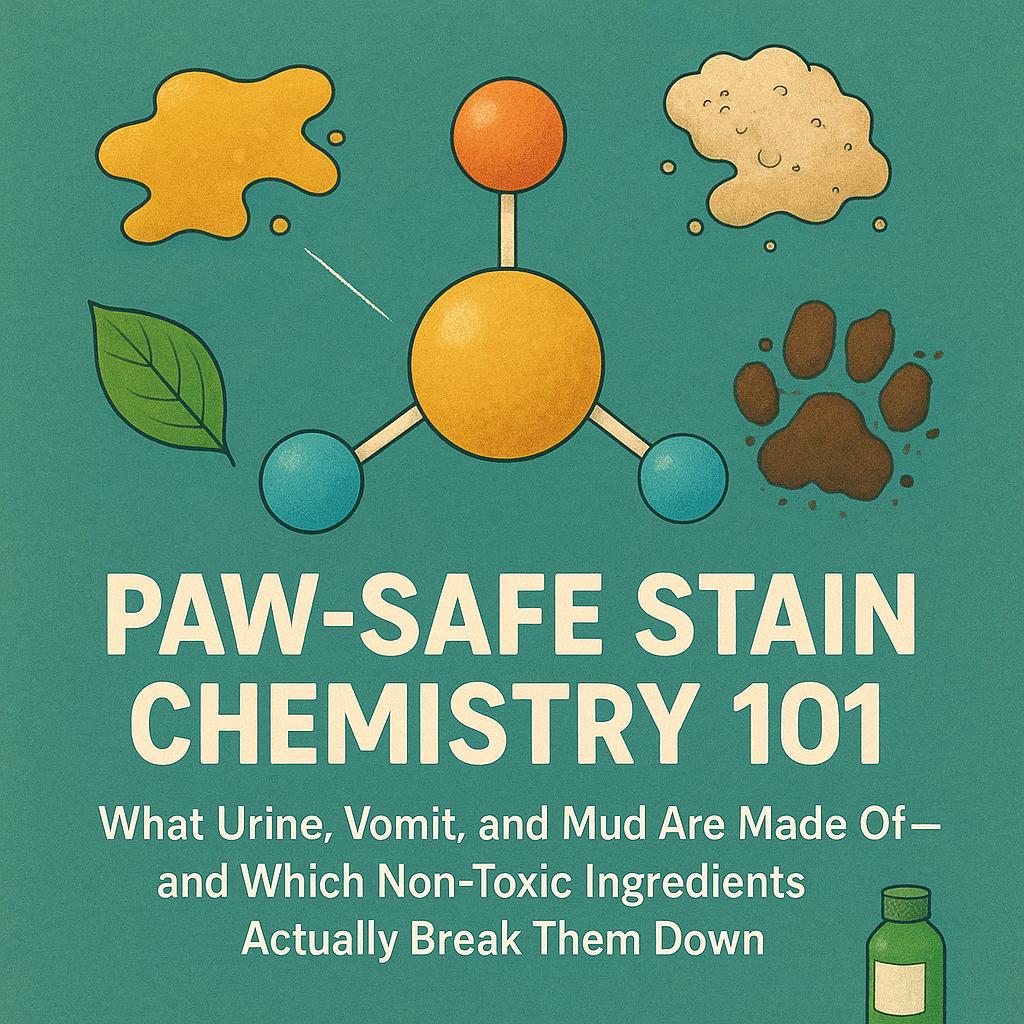
Paw-Safe Stain Chemistry 101: What Urine, Vomit, and Mud Are Made Of-and Which Non-Toxic Ingredients Actually Break Them Down
Pet stains are chemistry problems: match the mess to the gentlest reaction that dismantles it.
Urine is mostly water plus urea, uric acid crystals, salts, and odor-causing sulfur compounds. Safe breakdown relies on enzymes (uricase/protease blends) that digest crystals and residues instead of masking smell.
Vomit contains proteins, fats, and stomach acids. Use a mild surfactant to lift grease first, then enzymes to finish; avoid strong alkalis that can burn sensitive paws.
Mud is mineral grit plus organic matter. Let it dry, vacuum, then use a neutral pH cleaner; acids can etch stone and set iron-rich stains.
- ATP luminometers: Confirms residue removal fast, not just “looks clean.”
- Enzymatic cleaners: Targets uric/protein soils at low toxicity.
- Hydrogen peroxide 3%: Oxidizes lingering organics on colorfast fabrics (spot test).
DIY Enzyme Cleaners vs. Baking Soda & Vinegar: Choosing the Right Pet-Safe Formula for Carpets, Upholstery, and Hardwood
DIY enzyme cleaners win when odor is the problem, because enzymes digest the urine proteins that keep “re-blooming” after drying. Choose a pet-safe label and keep the area damp long enough to work; rushed drying is the usual failure point.
Baking soda + vinegar is best for quick, low-risk deodorizing and light spot lifting, not true urine removal. Mixing them mostly neutralizes both, so use them in sequence, not together.
- ATP bioluminescence swabs: Verifies if organic residue remains after cleaning.
- Bissell SpotClean Pet Pro: Extracts rinse water fast, reducing wick-back on textiles.
Carpets & upholstery: Blot, flood with enzyme cleaner, cover with a damp towel 30-60 minutes, then extract/rinse and dry. Use baking soda only after fully dry.
Hardwood: Avoid soaking. Use a barely damp enzyme wipe, then dry immediately. Vinegar can dull some finishes over time; spot-test first.
Step-by-Step Pet Stain Removal Without Harsh Fumes: Blotting, Neutralizing, Deodorizing, and Preventing Re-Soiling
Act fast: blot, don’t rub. Use white towels and press firmly, swapping until 90% of moisture is gone.
Neutralize by stain type.
- Urine (fresh): Flood lightly with cool water, blot, then apply a 1:1 mix of white vinegar + water. Wait 5 minutes; blot dry.
- Urine (set): After vinegar step, sprinkle baking soda and mist with 3% hydrogen peroxide (spot-test). Let dry; vacuum.
- Vomit/feces: Lift solids, then use vinegar mix; finish with baking soda to buffer lingering acids.
Deodorize and confirm you’ve hit the source.
- UV flashlight: Reveals hidden urine zones fast.
- Enzymatic cleaner: Breaks down odor molecules at the source.
Prevent re-soiling: clean 2-3 inches beyond the visible edge, dry with airflow, then block access until fully dry.
### Common Questions
- Will vinegar attract my pet back? Not if fully neutralized, dried, and followed with enzymes.
- Can I use peroxide on wool? Avoid; use enzymes only and test in an inconspicuous spot.
Disclaimer: Spot-test all products and consult a veterinarian for persistent accidents or skin sensitivities.
Sensitive Paws Checklist: Ingredient Red Flags, Dilution Ratios, and Floor-Rinse Practices to Prevent Irritation
Ingredient red flags (skip on paw-contact floors):
- Quats (e.g., benzalkonium chloride): Residue clings and can trigger paw dermatitis.
- Phenols/pine oils: Higher toxicity risk if licked during grooming.
- Ammonia + bleach (never mix): Forms chloramine gas; also harsh on skin barriers.
- Fragrance/essential oils (tea tree, citrus): Concentrated terpenes can irritate and are risky if ingested.
Dilution ratios used in recent floor-safety audits:
- Enzymatic cleaner: Use label dilution; don’t “boost” strength-residue increases irritation.
- Vinegar rinse (post-stain only): 1:10 vinegar:water; spot-test stone and sealed wood.
- Baking soda: Dry sprinkle, then vacuum; avoid gritty scrubbing that micro-scratches floors.
- ATP meters: Verifies clean vs. sticky residue in 15 seconds.
Floor-rinse practice: After cleaning, mop once with plain water, then towel-dry high-traffic paths to minimize paw pickup.
Q&A
1) What’s the safest, most effective “go-to” recipe for fresh pet urine on carpets or rugs?
Blot first (don’t rub). Then use a 1:1 mix of white vinegar and cool water in a spray bottle:
lightly mist the area, let sit 5-10 minutes, blot again, and repeat until the odor fades.
Finish by sprinkling baking soda over the damp spot; let it dry completely, then vacuum.
Why this works: vinegar helps neutralize alkaline urine salts; baking soda adsorbs lingering odor.
Paw-safety tip: keep pets off the area until it’s fully dry and vacuumed to avoid residue on pads.
2) The smell keeps coming back-what actually removes the odor, not just masks it?
For recurring or “ghost” odors, use an enzyme cleaner labeled for pet urine and safe for household use.
Enzymes break down the proteins/uric compounds that vinegar alone may not fully eliminate-especially in padding or subfloor.
How to use it correctly: saturate to the depth of the stain, allow the stated dwell time
(often 10-30+ minutes), then blot and air-dry. Avoid steam cleaning until the odor is gone; heat can set residues.
Do not mix: enzymes with vinegar, bleach, peroxide, or essential oils-these can deactivate the enzymes or add irritants.
3) What ingredients should I avoid for “sensitive paws,” and what are safer swap-ins?
Avoid common “natural” pitfalls that can still irritate paws and noses:
- Essential oils (tea tree, eucalyptus, citrus, peppermint): can be irritating and risky if licked off paws.
- Bleach or ammonia: harsh respiratory irritants; ammonia can mimic urine odor and encourage remarking.
- Strong peroxide mixes: can lighten dyes and irritate skin if residue remains.
Safer staples for most homes:
unscented dish soap (tiny amount for greasy spots),
white vinegar + water (odor neutralizing),
baking soda (dry deodorizing),
and a fragrance-free enzyme cleaner for biological stains.
Best practice: spot-test fabrics, rinse/blot well, and keep pets off treated areas until completely dry.
Key Takeaways & Next Steps
Living with pets doesn’t require harsher chemicals-it requires smarter chemistry and a little consistency. When you treat stains with paw-safe staples like enzymes, baking soda, and diluted vinegar, you’re not just removing a blemish; you’re breaking the scent “map” that invites repeat accidents while keeping floors and fabrics friendlier to sensitive skin.
Expert tip: keep a small “paw-safe stain kit” ready so you can act within minutes, when success rates are highest. Stock it with plain white paper towels, an enzyme cleaner (for urine/protein stains), a shaker of baking soda (for moisture and odor capture), and a spray bottle of 1:1 white vinegar and water (for neutralizing and light deodorizing). Blot first, don’t rub; treat with enzymes and let them sit the full dwell time; then use baking soda overnight and vacuum. For soft surfaces, finish by lightly misting with water and blotting again-this helps lift residual cleaner that can attract dirt.
Looking ahead, the cleanest homes for pets are designed for easy wins: washable covers, entryway paw wipes, and routine “sniff checks” in favorite corners. If you build fast, gentle cleanup into your habits, you’ll spend less time chasing odors and more time enjoying a home that’s truly comfortable-for you and every set of paws that crosses the room.

Sarah Jenkins is a lifelong animal advocate and pet wellness expert with over a decade of hands-on experience working alongside animal rescues. Passionate about nutrition, behavior, and daily care, she founded The Fletics Pet to translate complex pet health topics into actionable, easy-to-understand advice for everyday pet parents. When she isn’t researching the latest in pet care, you can find Sarah exploring hiking trails with her Golden Retriever, Max, or relaxing at home with her rescue cat, Luna.