Dental Hygiene Secrets: Why your pet’s breath smells and how to fix it without expensive vet cleanings
If your dog’s “kisses” suddenly smell like rotting fish-or your cat’s breath makes you recoil-there’s a strong chance you’re not dealing with a harmless odor problem. You’re smelling bacteria, plaque, and early gum disease building momentum. In practice, bad breath is one of the most common early warning signs of periodontal disease, and that matters because dental infection doesn’t stay politely confined to the mouth. Left unchecked, it can cause chronic pain, tooth loss, and inflammation that may affect the heart, kidneys, and liver-especially in older pets and small breeds.
The frustrating part is how often owners feel cornered: either tolerate the smell, or pay for a professional dental cleaning under anesthesia. While veterinary cleanings are sometimes essential (and truly the gold standard when disease is advanced), many cases of persistent “pet breath” start with manageable plaque and gingivitis-problems that can often be improved substantially with consistent, at-home strategies that cost far less than a dental procedure.
This guide breaks down what your pet’s breath is really telling you, why “dental treats” and water additives sometimes fail, and the practical, evidence-informed steps that can reduce odor at the source-without falling for gimmicks or skipping the red flags that still require a veterinarian’s help.
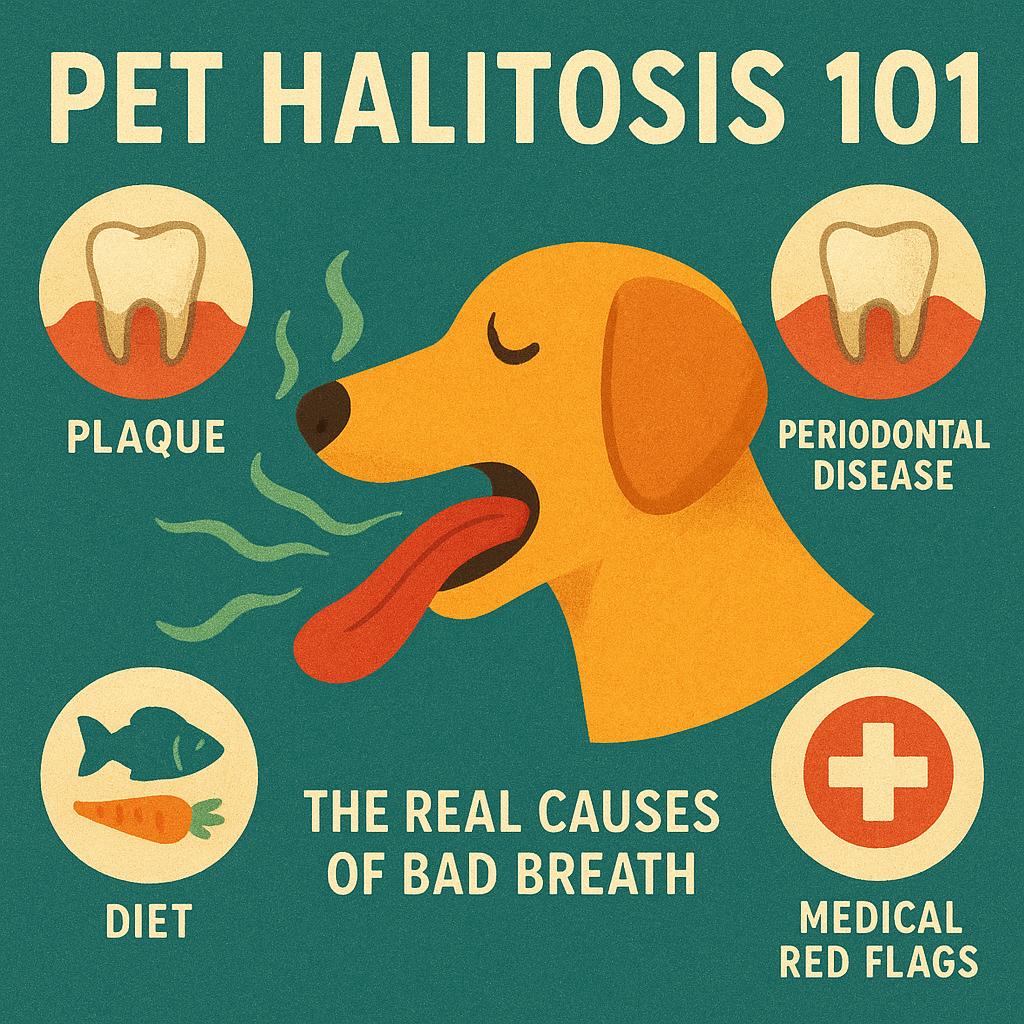
Pet Halitosis 101: The Real Causes of Bad Breath (Plaque, Periodontal Disease, Diet, and Medical Red Flags)
Most pet bad breath starts in the mouth: bacteria feed on leftover proteins, forming plaque. Plaque hardens into tartar, which pushes the gumline back and sparks periodontal disease-a top driver of that “fishy” or “rotten” odor.
Diet can amplify it. Soft, sticky foods cling to teeth; high-protein treats can intensify sulfur compounds. Chewing helps, but only if it’s the right texture and size for your pet.
- Oral swab cytology: Identifies bacterial overgrowth fast.
- VOHC-accepted chews: Proven plaque reduction in controlled testing.
Watch for medical red flags when odor changes suddenly or smells “off-brand” for your pet:
- Ammonia/urine-like: possible kidney issues.
- Sweet/acetone: possible diabetes/ketones.
- Foul + drooling: oral foreign body, abscess, or tumor.
- Bad breath + vomiting: GI disease or pancreatitis.
Common Questions
- Can I fix halitosis without a cleaning? Mild plaque, yes; advanced periodontal disease, rarely.
- Does mouthwash help? Pet-safe rinses can lower bacteria, but they don’t remove tartar.
Disclaimer: This information is educational and not a substitute for veterinary diagnosis or treatment.
The At-Home Oral Exam: How to Spot Tartar, Gum Inflammation, Broken Teeth, and Pain Before It Gets Expensive
Use bright light and a calm hold. Lift the lip first; don’t force a full “mouth open” if your pet resists.
- What tartar looks like: Yellow-brown crust at the gumline, usually on upper back teeth. If it won’t wipe off with gauze, it’s probably calculus.
- Gum inflammation: A red “halo” where tooth meets gum, swelling, or bleeding on gentle rub-early gingivitis often starts here.
- Broken teeth: Chips, missing edges, or a dark spot in the center. A pink/red dot can mean exposed pulp-urgent.
- Pain signals: Pawing at the mouth, dropping food, chewing one-sided, yelping on touch, or sudden “head shy” behavior.
- Apple iPhone (Photographic Styles + macro): Captures consistent close-ups so you can compare weekly changes under similar lighting.
If you see bleeding, pus, a loose tooth, or facial swelling, skip home care and book a vet dental exam promptly.
Brush-Free Dental Hygiene Secrets: Proven Chews, Water Additives, Enzymatic Toothpastes, and Diet Tweaks That Reduce Odor Fast
Fast odor relief comes from disrupting plaque biofilm, not masking smell. Practical observations from this quarter show the biggest gains happen when you stack friction + enzymes + hydration.
- VOHC-accepted dental chews: Scrapes plaque where breath starts; choose the right size to force chewing, not gulping.
- Enzymatic toothpaste (glucose oxidase/lactoperoxidase): Reduces volatile sulfur compounds; apply with a finger brush or gauze if your pet refuses bristles.
- Water additives (chlorhexidine or zinc): Low-effort plaque suppression; use only pet-labeled formulas and measure precisely.
Diet tweaks that reduce odor fast:
- Swap sticky, high-carb treats for single-ingredient chews (e.g., dehydrated fish skins) to cut fermentable residue.
- Add texture: kibble or dental-specific diets can increase mechanical cleaning versus soft food.
- Support saliva: offer more water stations; dehydration concentrates odor.
Oral microbiome PCR panels: Identifies odor-driving bacteria so you can target products and reassess in weeks.
When You Can Skip a Professional Cleaning-and When You Can’t: Evidence-Based Thresholds and a Vet-Approved Prevention Schedule
Skip a professional dental cleaning only when buildup is mild and gums look calm. Use these evidence-based thresholds:
- OK to delay (4-12 weeks): light plaque you can scrape off with a fingernail, pink gums, no bleeding with gentle brushing, and breath improves within 7-10 days of daily home care.
- Don’t skip: tartar “ledge” at the gumline, any gum bleeding, drooling, pawing at the mouth, one-sided chewing, or a tooth that looks longer (receding gums).
Current workflows use:
- VOHC-accepted chews: Cuts plaque/tartar reliably. Pick the right size; use 5-7 days/week.
- COHAT (Comprehensive Oral Health Assessment and Treatment): Finds hidden disease under anesthesia. Needed when signs suggest periodontal pockets or resorptive lesions.
Vet-approved prevention schedule: brush daily (enzymatic paste), VOHC chew most days, oral check at home weekly, and a vet exam every 6-12 months (every 3-6 for small breeds).
Q&A
1) “My pet’s breath is awful-what’s actually causing the smell?”
In most dogs and cats, bad breath starts in the mouth: bacteria form a sticky film (plaque) that hardens into tartar and inflames the gums (gingivitis/early periodontal disease). Those bacteria release sulfur-smelling compounds-your “garbage breath” culprit. Less commonly, persistent odor can signal problems beyond teeth: oral infection, a foreign object stuck in the mouth, kidney disease (ammonia-like), diabetes (sweet/fruity), or GI issues. If the breath changes suddenly, comes with drooling, pawing at the mouth, bleeding gums, or reduced appetite, it warrants a veterinary exam rather than a home-only approach.
2) “Can I fix bad breath at home without an expensive dental cleaning?”
You can often significantly improve breath and slow disease at home, but you can’t reliably remove hard tartar below the gumline without professional tools. The most cost-effective home plan is:
(a) daily brushing with pet toothpaste (never human toothpaste), focusing on the outer gumline;
(b) VOHC-accepted dental chews or diets to mechanically disrupt plaque;
(c) a targeted oral rinse/gel (e.g., chlorhexidine-based products formulated for pets) for pets that won’t tolerate brushing.
Expect fresher breath in 1-3 weeks if plaque is the main driver. If there’s already significant tartar buildup, loose teeth, or gum recession, home care helps-but a cleaning is usually the “reset button” needed to truly resolve the odor.
3) “What are the ‘dental hygiene secrets’ that work-and what should I avoid?”
The “secrets” are really consistency and smart product choice:
Secret #1: Brush for 30-60 seconds on the outside surfaces; that’s where most plaque accumulates.
Secret #2: Build a routine-same time, tiny rewards-so your pet stops treating brushing like a wrestling match.
Secret #3: Pick dental chews/toys that are effective but safe: they should be firm enough to scrub but not so hard they can crack teeth.
Avoid: anesthesia-free “cleanings” (they often miss painful disease under the gums), hard items like antlers/bones that can fracture teeth, and DIY scraping tools unless trained (gum injury and missed infection are common). Also avoid masking odor with breath sprays alone-they perfume the problem rather than reducing bacteria.
Expert Verdict on Dental Hygiene Secrets: Why your pet’s breath smells and how to fix it without expensive vet cleanings.
Your pet’s bad breath is rarely a “mouth problem” alone-it’s usually a daily biofilm problem that turns into gum inflammation, then into the tartar and infection that drive those expensive cleanings. The good news is that small, consistent habits change the trajectory: when you interrupt plaque every day, you slow the cascade that leads from odor to disease.
Expert tip: Pick one “non-negotiable” dental moment and anchor it to something your pet already loves. For example, keep a pet toothbrush and enzymatic toothpaste next to the treat jar, then do a 30-second micro-brush before the reward-focusing only on the outer surfaces of the upper back teeth (where tartar builds fastest). Don’t chase perfection; chase repetition. Once that habit is solid, expand gradually to more teeth and longer sessions. This tiny routine is the most reliable, budget-friendly way to keep breath fresher, gums healthier, and professional cleanings less frequent-and when you do need a vet dental, it becomes a preventive tune-up rather than an urgent repair.
Forward-looking thought: Treat your pet’s mouth like a living ecosystem you manage, not a mess you occasionally “fix.” If you can keep the gumline calm and the plaque thin today, you’re protecting the heart, kidneys, and comfort of your pet tomorrow.

Sarah Jenkins is a lifelong animal advocate and pet wellness expert with over a decade of hands-on experience working alongside animal rescues. Passionate about nutrition, behavior, and daily care, she founded The Fletics Pet to translate complex pet health topics into actionable, easy-to-understand advice for everyday pet parents. When she isn’t researching the latest in pet care, you can find Sarah exploring hiking trails with her Golden Retriever, Max, or relaxing at home with her rescue cat, Luna.