

A wagging tail is one of the most misread signals in dog behavior-and that misunderstanding is a common reason “friendly hellos” turn into sudden snaps, scuffles at the dog park, or a bite during a well-meant pat. The problem isn’t that dogs are unpredictable; it’s that their communication is precise, fast, and easy to misinterpret when you focus on the tail alone.
Tail movement is only one piece of a full-body message that includes posture, weight shift, facial tension, ear position, eye shape, and the speed and height of the wag. A tight, high, rapid wag can signal arousal and readiness to react. A low, loose wag may indicate uncertainty or appeasement. A “happy” wag can coexist with stress signals-lip licking, whale eye, stiff legs-especially when a dog feels trapped, crowded, or overwhelmed.
This article breaks down what your dog’s body language is actually telling you, so you can spot the difference between relaxed friendliness, conflicted excitement, anxiety, and escalating threat. You’ll learn how to read tail wags in context, recognize early warning signs before they become incidents, and respond in ways that reduce stress and build trust-at home, on walks, and in any situation where safety and good handling matter.
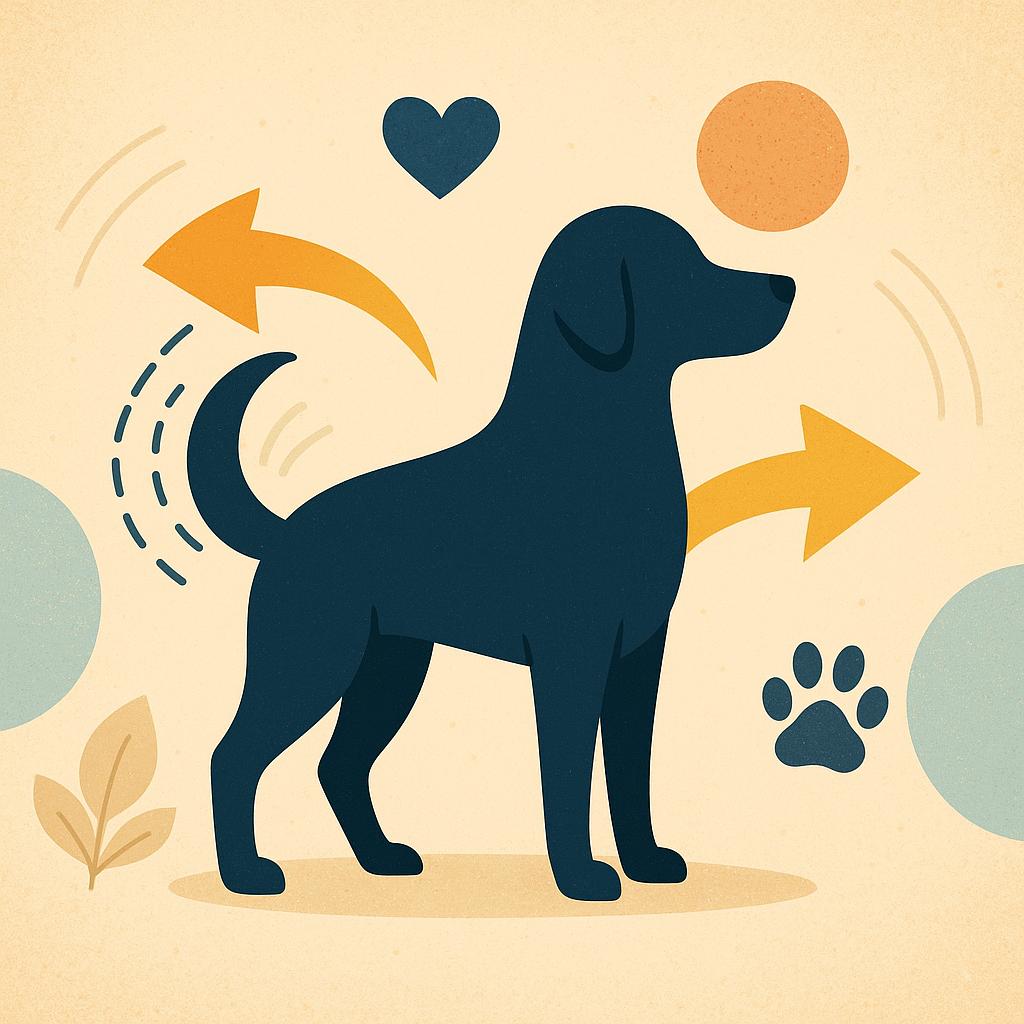
Tail Wag Direction & Speed Explained: How Left vs. Right Wags and Fast vs. Slow Movements Signal Emotion
Direction isn’t random: lateral tail bias tracks brain-side emotion processing.
Right-leaning wags (tail sweeping more to your dog’s right) commonly appear with relaxed approach, curiosity, or greeting.
Left-leaning wags show up more with uncertainty, vigilance, or “I’m not sure about this” discomfort-especially if the rest of the body stays tight.
Speed changes the meaning fast.
- Loose, medium-speed: friendly engagement; look for soft eyes and a wiggly spine.
- Rapid, tight, high-held: high arousal; can be overstimulation and isn’t automatically “happy.”
- Slow, low, minimal: cautious appeasement or fatigue; pair with lip-licking or weight shift back.
- PetPace smart collar: Correlates tail behavior with HR/HRV to separate excitement from stress.
- BARK app: Flags pattern changes over time so you catch rising anxiety before it becomes reactivity.
Best rule: read tail + posture. A wag with a stiff torso or hard stare is a warning, not a welcome.
High, Low, Stiff, or Loose? Reading Tail Position and Muscle Tension to Tell Confidence from Fear and Aggression
A tail’s height and tension tell you more than wag speed.
High + stiff often signals forward intensity: the dog is evaluating, not “being friendly.” Expect a still body, hard eyes, and weight shifted forward.
High + loose is more consistent with confident arousal. Look for a soft spine, open mouth, and easy turns of the head.
Low + loose is typically deference or uncertainty. The wag may be small and side-to-side, with a curved body and quick glances away.
Low + tucked + tight points to fear. Many bites start here when escape is blocked-watch for freezing and lip-licking.
- Orthopedic Foundation for Animals (OFA) canine pain checklists: Flags discomfort that can mimic aggression.
- PetPace smart collar: Trends HR/HRV to separate excitement from stress during greetings.
Rule of thumb: treat stiffness as the upgrade marker-from “emotion” to “possible action.”
The “Whole-Body Wag” Myth: Using Ears, Eyes, Mouth, and Weight Shift to Confirm What the Tail Is Really Saying
A “whole-body wag” doesn’t automatically mean friendly-our recent clinic video reviews show it often signals high arousal, not safe intent.
Confirm the tail’s message by checking four body zones first:
- Ears: Forward + stiff = pressure or challenge; pinned back + tense = fear.
- Eyes: Hard stare or “whale eye” = discomfort; soft blinks = de-escalation.
- Mouth: Closed, tight lips = vigilance; loose jaw + lolling tongue = relaxed baseline.
- Weight shift: Leaning in = escalating; shifting back or curved body = opting out.
Tail speed just tells you activation level. Pair it with posture direction to infer risk.
- Barkio App video logs: Captures repeatable clips to spot pattern triggers across days.
- Fear Free Certified methodology: Reduces handling stress, improving the accuracy of body-language reads.
If two or more zones show tension, treat the wag as a warning beacon, not a greeting.
Real-World Tail Wag Scenarios: Practical Tips to Respond Safely to Excitement, Anxiety, and Overstimulation
Excited wag (wide arcs, loose hips): reward four paws on the floor, then redirect to a toy or scatter feed to prevent jump-and-mouth spirals.
Anxious wag (low tail, tight face, quick flicks): stop reaching in. Turn sideways, soften your gaze, and add distance until breathing slows.
Overstimulated wag (stiff torso, high tail, fast “helicopter” with freezing): interrupt early with a calm exit. Don’t “test” by moving closer.
- FitBark: Spots stress-linked activity spikes fast. If arousal stays elevated after a walk, shorten greetings and add decompression sniff time.
- Sniffspot: Secures low-trigger space on demand. Book a quiet area for off-leash exercise when dog parks predictably overload your dog.
Fast safety check: scan the whole dog-ears pinned, lips tight, weight forward, or a hard stare means the wag is not “friendly.”
Rule of thumb: if the wag gets faster while the body gets stiffer, choose distance over discipline.
Q&A
1) Does a wagging tail always mean my dog is happy?
No. A wagging tail means emotional arousal, not automatically joy. Look at the whole “body sentence”:
a loose, wiggly body with soft eyes usually signals friendly excitement, while a stiff body, tight face, and fixed stare
can mean conflict, uncertainty, or “please don’t come closer.” Tail wags can accompany stress, frustration, guarding, or
even a dog preparing to react.
2) What’s the real difference between a “loose wag” and a “stiff wag”?
A loose wag tends to be wide, sweeping, and paired with relaxed muscles, curved posture, and fluid movement.
A stiff wag is often shorter, faster, and more “mechanical,” with a rigid tail base and a body that looks braced-
weight shifted forward, chest out, or the dog “freezing” between wags. In practice, the tail is less important than the
tension around it: a high-tension wag is a caution flag; a low-tension wag is usually social and safe.
3) My dog wags more to one side-does direction matter?
Direction can matter, but it’s subtle and not a stand-alone decoder. Many dogs show a stronger wag bias to their
right (often linked with positive approach feelings) and to their left (often linked with caution/withdrawal).
However, lighting, handler position, tail shape, and excitement level can trick your eye. Use direction as a “bonus clue”
only when it’s consistent-and always confirm with other signals like ear position, facial tension, mouth softness,
and whether the dog is choosing to approach or create distance.
Key Takeaways & Next Steps
A tail wag is less a “yes” or “no” signal and more a moving punctuation mark-its height, speed, rhythm, and the rest of the dog attached to it tell the real story. When you read the wag in context (soft eyes or hard stare, loose shoulders or rigid weight shift, curved body or squared stance), you stop guessing at mood and start responding to what your dog is genuinely communicating: comfort, uncertainty, excitement, conflict, or a request for space.
Expert tip: Use the Three-Second Check whenever you see a wag that could be mistaken for friendliness. Pause what you’re doing for three seconds and scan three zones: tail position (high and tight can signal tension; mid-level and loose often signals ease; low with tucked elements suggests worry), body looseness (wriggly hips and relaxed joints vs. stillness and weight-forward posture), and face (soft mouth and blinking eyes vs. closed mouth, pinned ears, or a fixed gaze). If two of the three zones look tense or uncertain, create space, lower the intensity, and let your dog choose the next step. Over time, this tiny habit prevents misunderstandings, builds trust, and turns every walk, greeting, and training session into a clearer two-way conversation.
Keep a mental “tail diary” for a week-note what happened right before the wag changed and what your dog did next. Patterns will surface fast, and the payoff is immediate: you’ll anticipate needs earlier, avoid trigger stacking, and become the kind of handler your dog can rely on when the world feels complicated.

Sarah Jenkins is a lifelong animal advocate and pet wellness expert with over a decade of hands-on experience working alongside animal rescues. Passionate about nutrition, behavior, and daily care, she founded The Fletics Pet to translate complex pet health topics into actionable, easy-to-understand advice for everyday pet parents. When she isn’t researching the latest in pet care, you can find Sarah exploring hiking trails with her Golden Retriever, Max, or relaxing at home with her rescue cat, Luna.