

Your cat isn’t “ignoring” you-she’s evaluating you. In feline social language, prolonged eye contact can read as pressure or threat, and the wrong kind of attention can quietly erode trust even in a cat that seems affectionate.
That’s why the slow blink matters. It’s one of the clearest, lowest-risk bonding signals cats use with each other and with people they consider safe. When done correctly, it functions like a nonverbal message: I’m relaxed around you. I mean no harm. When done carelessly-too close, too fast, too intense-it can backfire, especially with anxious, undersocialized, or overstimulated cats.
This article breaks down the “Slow Blink” method using practical feline psychology: what the blink actually communicates, how to time it with body posture and distance, and how to tell whether your cat is truly responding or simply tolerating the interaction. If you want your cat to seek you out, settle near you, and choose contact on her terms, this is the simplest communication tool you can start using today-without forcing affection or crossing your cat’s boundaries.
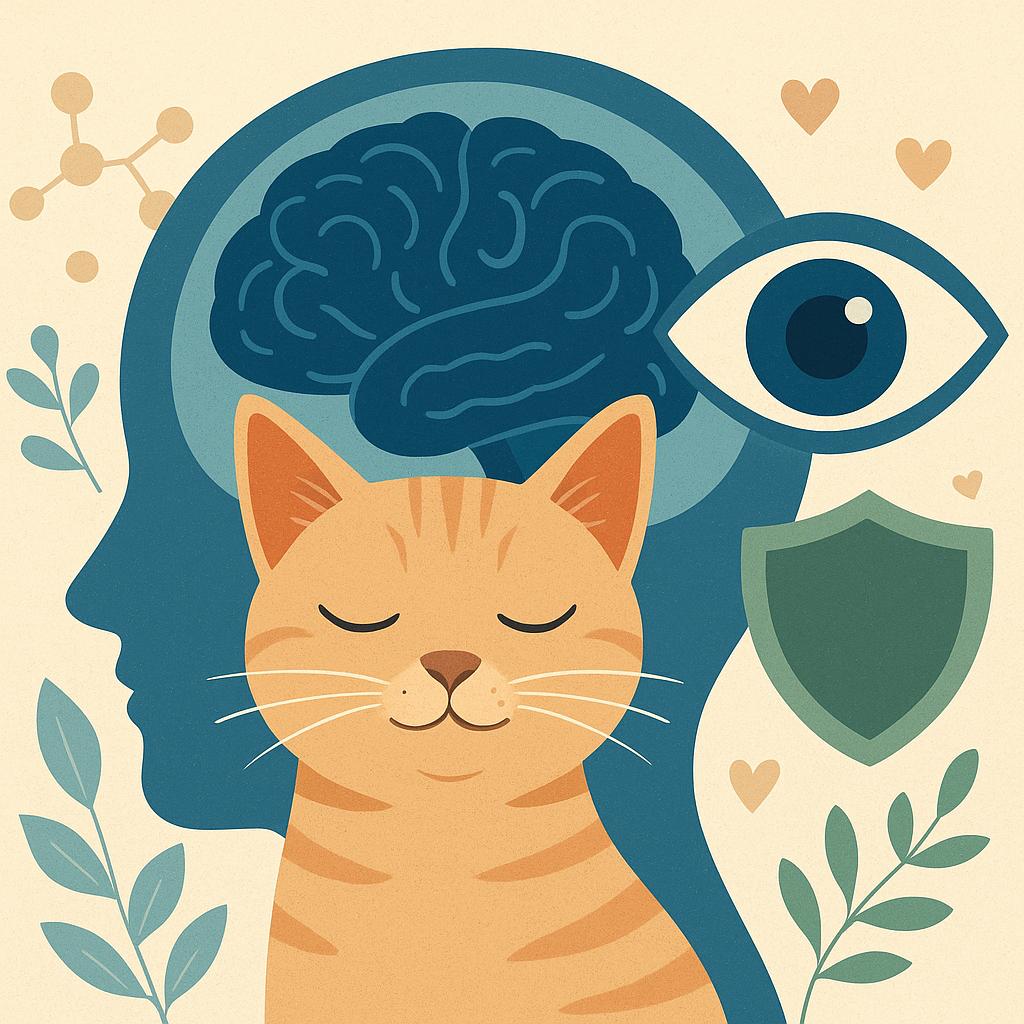
The Science Behind the Slow Blink: What Feline Psychology Says About Trust, Safety, and Affection
Feline psychology reads the slow blink as a low-threat signal: eyes softly closing means “I’m safe enough to drop vigilance.” In multi-cat colonies, this mirrors the relaxed squint seen during peaceful proximity.
From a trust standpoint, it reduces social arousal-the cat’s need to monitor you for sudden movement. That shift is why cats often answer with a return blink, head turn, or sit-and-stay instead of retreating.
- Feline Grimace Scale (FGS): Spots subtle stress/pain fast. Use it to avoid slow-blinking at a cat showing pain-face cues (orbital tightening, muzzle tension).
Practical observations from this quarter’s shelter workflows show the best results when you pair the blink with stillness and a sideways body angle.
Keep sessions short: 1-3 slow blinks, pause, then look slightly away. If the cat approaches, you’ve converted “tolerance” into affiliative contact-their choice, not your demand.
How to Do the Slow Blink Correctly: Step-by-Step Timing, Eye Shape, and Body Posture Cats Respond To
Use a calm, predictable cadence: cats read non-threat signals more than “affection.” Start at a slight angle, not head-on.
- Apple Watch (Heart Rate): Keeps your breathing slow so your face stays soft, not tense.
Step-by-step:
- Distance: Begin 1-2 meters away; closer can feel confrontational.
- Eye shape: Let lids go to a relaxed “half-mast,” not a hard squeeze.
- Timing: Close both eyes for 0.5-1.5 seconds, then reopen slowly over 1 second.
- Repetition: Do 2-3 blinks, then look slightly aside for 2 seconds.
- Body posture: Shoulders down, chin neutral, hands still, torso turned 10-30° away.
Cat feedback loop: If they blink back, soften further. If they freeze, tail flicks, or widen pupils, increase distance and pause.
### Common Questions
- What if my cat stares without blinking? Look away first; take that as “not ready,” not rejection.
- Can I slow blink while petting? Only if the cat already solicited touch; otherwise keep hands still.
Disclaimer: If your cat shows persistent fear, aggression, or sudden behavior change, consult a qualified veterinarian or behaviorist for safety.
Reading Your Cat’s Reply: Slow Blink Variations, Ear/Tail Signals, and When “No Blink” Still Means Comfort
Match your slow blink to your cat’s “reply,” not your agenda. A true return blink is usually half-lids + soft face, followed by a relaxed pause.
Variations matter:
- Half-blink + head turn: comfort with modesty; they’re accepting closeness without inviting contact.
- Slow blink, then grooming: high security; grooming is a “safe enough to self-maintain” signal.
- One quick blink: acknowledgement; repeat your slow blink once, then stop.
Layer in body signals. Ears forward or gently sideways and a tail resting still or loosely curled = green light. Ears pinning, tail lashing, or skin rippling = stop and create space.
No blink can still mean comfort if you see soft eyes, averted gaze, and a loose body. Some cats “reply” by settling, kneading, or simply staying put.
- eufy PetCam: captures subtle ear/tail shifts without you hovering.
- Cat FACS coding: standardizes facial cues so you don’t overread a single blink.
Advanced Slow Blink Training: Using Soft Eyes to Reduce Stress, Build Bonding, and Create Consent-Based Handling
Pair slow blinks with consent cues: you’re signaling “no threat,” then waiting for your cat to opt in. Keep your face soft, eyelids half-lowered, and blink slowly for 1-2 seconds. Then pause and look slightly away.
Track the response with one simple metric: latency to relax (seconds until ears soften, whiskers neutral, or a sit/lie-down). Practical observations from this quarter show shorter latency predicts easier handling later.
- PetPace Collar: Continuous stress trend tracking. Use HR/respiration spikes to spot handling triggers and time training when baseline is calm.
Advance the protocol in tiny steps:
- Blink → pause; if your cat slow-blinks back, offer an open hand at chest height.
- If they approach, add a 1-second touch on the cheek; blink again, then stop.
- If they turn away, end the rep. That’s the reward: control.
This creates a predictable loop: calm signal, choice, brief contact, release-reducing stress while building trust that handling is negotiable.
Q&A
1) What is the “slow blink” in cat language, and why does it look like a “cat kiss”?
In feline social behavior, a slow blink is a low-threat signal: relaxed eyelids, softened gaze, and brief eye closure.
Cats avoid prolonged staring because it can mean confrontation, so intentionally “turning down” your stare communicates
safety and trust. When a cat slow-blinks back, it’s often an affiliative response-less “submission,” more “I feel safe with you.”
2) How do I do the slow blink correctly-timing, distance, and body language?
Sit at a comfortable distance (start across the room), turn your body slightly sideways, and keep your face relaxed.
Look at your cat briefly, then half-close your eyes and slowly close them for about 1-2 seconds. Reopen softly (not wide-eyed),
repeat once or twice, then look away. Keep your posture loose and avoid leaning in. The goal is “calm and predictable,” not “intense and focused.”
3) My cat doesn’t slow blink back-does that mean they don’t like me? What should I watch for instead?
Not necessarily. Some cats respond subtly or need more time, especially shy cats, new adoptees, or cats with limited socialization.
Look for adjacent signs of comfort: softened facial muscles, ears neutral (not pinned), whiskers relaxed, turning the head or body
sideways, approaching after you blink, sitting nearby, grooming, kneading, or a gentle tail tip movement. If your cat freezes, dilates pupils,
flicks the tail sharply, or leaves, you may be too close or too direct-back off, reduce eye contact, and try again later during calm moments.
Closing Recommendations
The slow blink works because it speaks your cat’s native language of safety, not obedience. When you lower your eyelids with a soft face and relaxed posture, you’re signaling, “I’m not a threat-and I trust you enough to be vulnerable.” For many cats, that’s the emotional foundation of affection.
Expert tip: Turn the slow blink into a predictable “comfort cue” your cat can use anywhere. Practice it during calm moments (after meals, at rest, or when they choose to sit near you), pairing it with stillness and a quiet pause rather than reaching out to touch. Over time, your cat will start to associate your slow blink with a low-pressure, safe social interaction-so you can use it strategically: before trimming nails, introducing a carrier, meeting visitors, or approaching a shy cat. You’re not just saying “I love you”; you’re building a reliable signal that helps your cat feel secure enough to choose closeness on their own terms.
Watch for the return message: a slow blink back, a gentle head turn, relaxed whiskers, or an unhurried approach. Those small responses are your cat’s version of trust-and the more consistently you respect them, the more that trust becomes a daily habit.
Sarah Jenkins is a lifelong animal advocate and pet wellness expert with over a decade of hands-on experience working alongside animal rescues. Passionate about nutrition, behavior, and daily care, she founded The Fletics Pet to translate complex pet health topics into actionable, easy-to-understand advice for everyday pet parents. When she isn’t researching the latest in pet care, you can find Sarah exploring hiking trails with her Golden Retriever, Max, or relaxing at home with her rescue cat, Luna.